The journey to parenthood is often filled with immense hope, but it can also come with significant medical uncertainties. For couples navigating complex reproductive challenges or those with a strong family history of genetic disorders, knowing if an embryo is healthy enough is paramount.
This is where Preimplantation Genetic Diagnosis (PGD) emerges as a revolutionary, life-changing technology. At Nimaaya Vadodara, under the expert guidance of Dr. Yuvraj Jadeja, we understand that PGD is not just a procedure; it’s a pathway to informed decision-making and peace of mind. If you are searching for PGD Vadodara or seeking clarity on advanced genetic screening options, this guide is designed specifically for you. We will demystify the science, explain the process step-by-step, and help you understand how PGD can significantly increase your chances of achieving a healthy, genetically sound pregnancy.
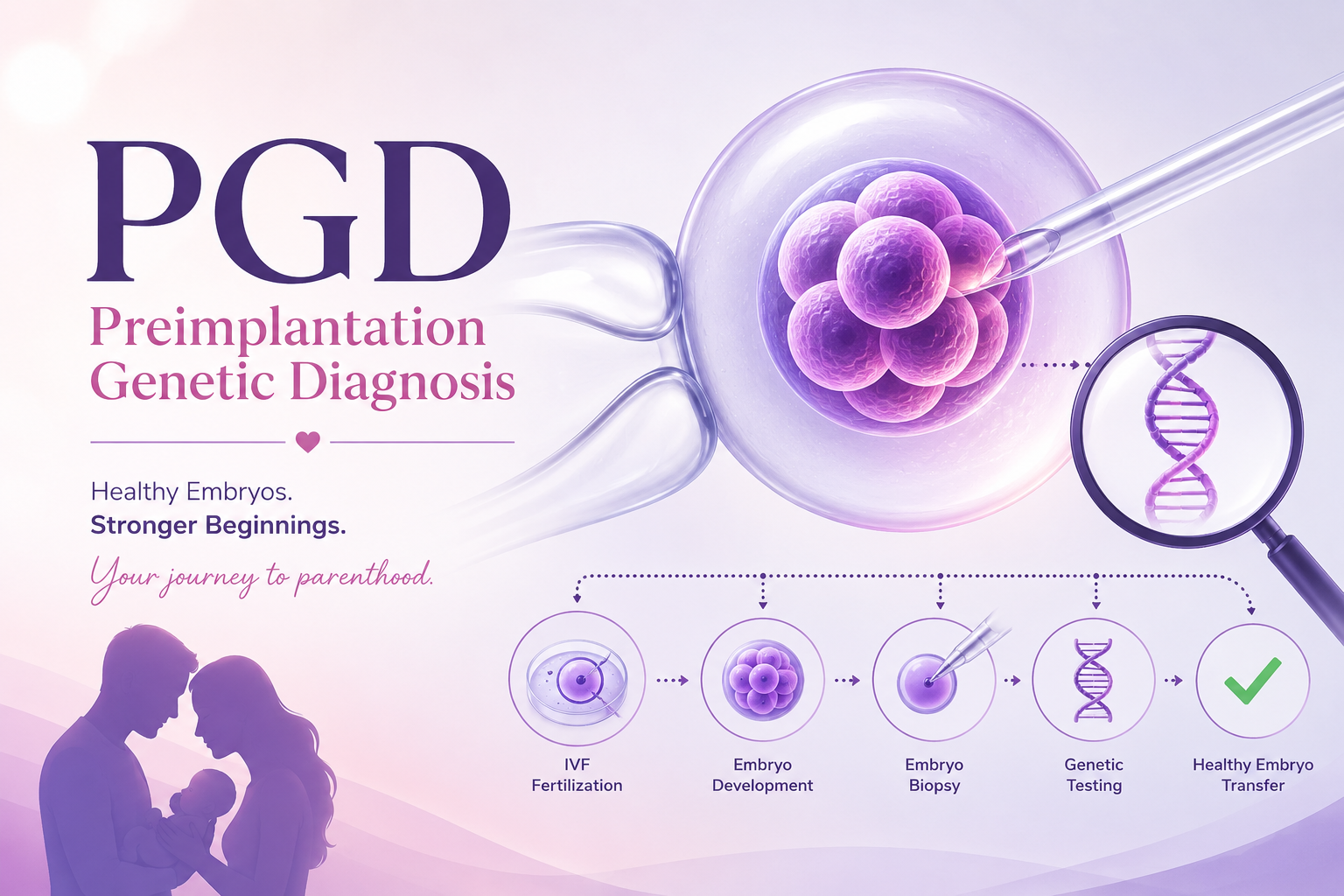
In simple terms, PGD is an advanced diagnostic process performed after embryos have been created through IVF and before they are transferred into the uterus. It allows medical professionals to analyze the genetic makeup of these embryos at the earliest stages. Unlike standard prenatal testing which screens a fetus later in pregnancy, PGD gives us a look at the embryo’s blueprint while it is still contained in the lab environment. We examine the chromosomes, the structures carrying our genetic code, to ensure that the embryo is chromosomally normal (euploid).
Chromosomal abnormalities are often silent until much later, leading to miscarriage or health issues for the child. PGD acts as a meticulous quality control check. By identifying potential chromosomal imbalances before implantation, we maximize the chances of carrying a viable embryo that has the highest potential for a successful and healthy pregnancy. This targeted approach is what makes IVF with PGD Vadodara so effective.